
When we think of Mexican cuisine, few dishes embody the richness of its history and culture like mole. This complex, flavorful sauce has become a staple in traditional celebrations, but its origins go far deeper than most realize. Mole’s history is as intricate as its recipe, rooted in indigenous rituals and shaped by colonial influences. Let’s explore how this dish evolved from Aztec festivals to the centerpiece of contemporary Mexican feasts.
A Sauce for the Gods
Mole traces its beginnings back to pre-Hispanic times when the Aztecs prepared intricate sauces as offerings to their gods. These sauces, known as “molli,” were made from various ingredients, including chili peppers, tomatoes, and sometimes unsweetened cocoa. The combination of bitter, spicy, and savory flavors was believed to please the gods, and mole was often featured in religious ceremonies and royal banquets.
In those times, food wasn’t just sustenance—it held deep symbolic value. The Aztecs, who considered cacao sacred, used it in a variety of dishes. Unlike today’s sweeter chocolate-based moles, ancient Aztec versions were more about complexity and balance between heat and bitterness. These early iterations of mole provided a unique cultural tie to the deities, with each ingredient symbolizing a piece of their cosmology. Preparing these sacred dishes wasn’t just an act of cooking—it was an act of devotion.

The Spanish Influence
The arrival of the Spanish conquistadors in the 16th century dramatically altered the culinary landscape of Mexico. New ingredients like almonds, raisins, and cinnamon were introduced and incorporated into the Aztec “molli,” giving rise to what we now recognize as mole. The story goes that a nun in Puebla first created mole poblano by combining these ingredients with native flavors to make a special dish for visiting Spanish dignitaries.
While this origin story adds an element of mystique to the dish, mole’s evolution wasn’t a single event. It took generations of experimentation, combining the new spices brought over by the Spanish with native Mexican ingredients, to create the elaborate sauce we now cherish. Today, mole represents the fusion of two worlds—the blending of indigenous Mexican culture with European influences. It’s a culinary symbol of colonial Mexico, combining the best of both cultures into something entirely unique.
A Dish for Celebrations
While mole’s roots are steeped in history, it’s the ceremonial nature of the dish that makes it truly special. Mole is not your everyday Mexican meal; it’s reserved for weddings, baptisms, and national holidays like Día de los Muertos. Its preparation is an event in itself, often involving a communal effort as families gather to roast, grind, and mix dozens of ingredients to create a sauce that simmers for hours.
Preparing mole is an act of patience, love, and family tradition. It can take hours—sometimes days—to perfect. In some regions of Mexico, making mole for an important event is a communal process, with entire families coming together to prepare the sauce. The process begins by roasting the peppers, which are then ground with spices, nuts, and chocolate. Each step is deliberate, as the delicate combination of ingredients determines the sauce’s eventual flavor.
The Difficulty Factor
If you’ve ever attempted to make mole at home, you know it’s no easy task. Recipes can call for anywhere from 20 to 30 ingredients, including chilies, spices, chocolate, nuts, and more. Grinding everything by hand using a molcajete or metate adds a traditional yet time-consuming element to the process. Some home cooks opt for modern tools like blenders or food processors, but purists believe that the stone tools bring out flavors that machines can’t replicate.
The tricky part is not just in the ingredients but in achieving the right balance of flavors. Mole should be savory, slightly sweet, a bit spicy, and just a touch bitter. Getting that balance just right can be challenging, especially with so many elements involved. Some cooks prefer using recipes passed down through generations, while others experiment with regional variations to find their perfect version.
Despite its complexity, the sense of accomplishment that comes from successfully making mole is unparalleled. And the taste? Worth every ounce of effort.
Mole Today
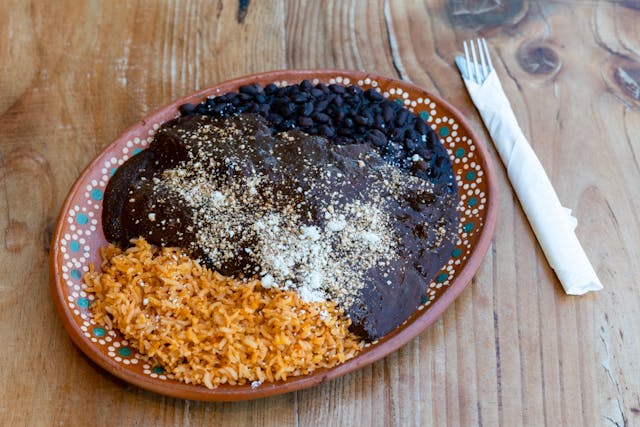
From mole poblano to mole negro, this dish continues to evolve and be celebrated across Mexico. Regional variations showcase the diversity of Mexican cuisine, with some versions being spicier, smokier, or sweeter than others. Mole verde, for instance, has a much lighter and fresher flavor profile, while mole negro from Oaxaca is known for its deep, smoky complexity. Each region in Mexico puts its own spin on mole, using local ingredients to add a distinct flavor.
Today, mole is a symbol of Mexican culinary artistry, bridging ancient traditions with modern tastes. While it may seem intimidating to the novice cook, mole’s true beauty lies in its ability to connect people with their cultural heritage. Whether enjoyed at a family gathering or a restaurant, every bite of mole tells a story—a story of resilience, creativity, and the merging of worlds.
Next time you indulge in a plate of chicken or turkey drenched in mole, remember that you’re not just enjoying a delicious meal—you’re partaking in a centuries-old tradition. Mole’s history, from the Aztec festivals to modern celebrations, highlights the deep cultural connections in every bite. So the next time you sit down to savor this dish, think of the generations of cooks who perfected the recipe, blending flavors to create something uniquely Mexican.
