Of all the dishes in Mexican cuisine, few are as visually striking or historically significant as chiles en nogada. This dish, with its green, white, and red color scheme, is often considered the most patriotic of Mexican meals, especially during Independence Day celebrations in September. However, beyond its vibrant presentation lies a fascinating story of colonial influences, culinary creativity, and an unexpectedly tangy walnut sauce. Let’s dive into the rich history and complexity of chiles en nogada, exploring why it has become such an iconic dish.
The Origins: A Dish for Royalty
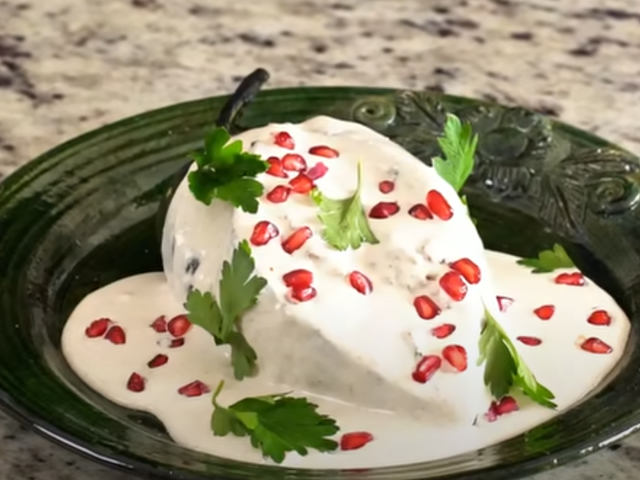
Legend has it that chiles en nogada was first created by Augustinian nuns in Puebla in 1821 to celebrate the independence of Mexico and to honor the country’s military leader, Agustín de Iturbide. The dish was designed to reflect the colors of the newly created Mexican flag: green from the poblano peppers, white from the creamy walnut sauce (nogada), and red from the pomegranate seeds.
While this origin story is captivating, it’s likely more folklore than fact. However, what is clear is that chiles en nogada is a product of Mexico’s complex history. The dish represents a fusion of indigenous Mexican ingredients, such as poblano peppers and native spices, with European ingredients brought over during Spanish colonization, like walnuts and pomegranates. The dish’s history is deeply intertwined with the colonial era, making it a unique culinary symbol of Mexico’s independence.
A Seasonal Masterpiece
One of the most intriguing aspects of chiles en nogada is its seasonal nature. This dish is traditionally prepared during the late summer and early fall, coinciding with Mexico’s Independence Day celebrations. The timing is no accident—chiles en nogada is made when its key ingredients, fresh walnuts and pomegranates, are in season. The walnuts are harvested during the summer, and their freshness is essential to achieving the creamy texture of the nogada sauce. Similarly, pomegranates are at their best during this period, adding a vibrant burst of color and acidity to the dish.
The Flavor Explosion: Sweet Meets Savory
At its core, chiles en nogada is a stuffed poblano pepper, but the complexity of the dish lies in its filling and sauce. The roasted poblano pepper is filled with picadillo, a mixture of ground meat (usually pork or beef), dried fruits (such as raisins, peaches, or apples), and spices like cinnamon and cloves. This filling is a balance of sweet and savory—the dried fruits add a subtle sweetness that contrasts with the savory meat and spices.
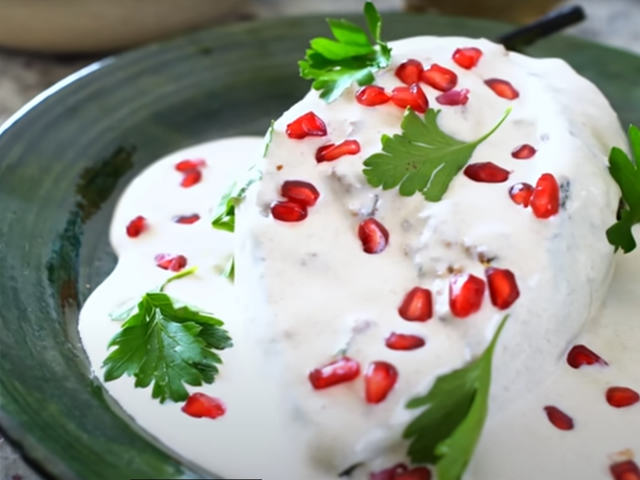
The star of the dish, however, is the nogada sauce. Made from freshly peeled walnuts, the sauce is creamy, slightly tangy, and mildly sweet. The traditional preparation involves blanching the walnuts to remove their bitter skin, then blending them with milk, cheese, and sometimes sugar or cinnamon to achieve a smooth, luscious texture. The sauce is then poured generously over the stuffed poblano, creating a rich, velvety blanket of flavor.
To finish, the dish is topped with pomegranate seeds, adding a burst of tartness and freshness. The combination of the sweet-and-savory filling, the creamy walnut sauce, and the bright, acidic pomegranate seeds creates a flavor profile that is uniquely chiles en nogada—no other dish combines these elements quite like this one.
The Challenge of Creating Chiles en Nogada
Chiles en nogada is notorious for being one of the most labor-intensive dishes in Mexican cuisine, making it a true culinary challenge. Preparing the dish requires meticulous attention to detail at every stage, from roasting the peppers to peeling the walnuts.
One of the most challenging aspects is creating the perfect balance of flavors. The sweetness from the fruit in the picadillo must complement, not overpower, the mild heat of the poblano peppers and the creamy richness of the nogada sauce. Too much sweetness can throw off the delicate balance, while too little sweetness can leave the dish feeling flat. The dish must be seasoned carefully with spices like cinnamon and cloves to maintain harmony between all of the components.
Moreover, getting the texture of the walnut sauce just right is no easy feat. Traditional recipes call for painstakingly peeling the walnuts by hand, ensuring that no bitter skins remain. The sauce is then blended until it’s perfectly smooth, with no grittiness. Achieving the right consistency is critical—too thick, and the sauce becomes cloying; too thin, and it fails to coat the stuffed peppers properly.
A Feast for the Eyes (and the Palate)
Beyond its complex preparation, chiles en nogada is a true feast for the eyes. Its presentation is as striking as its flavor. The tri-color palette of green, white, and red makes the dish a visual representation of Mexican pride and national identity. During the Independence Day celebrations, chiles en nogada is often the centerpiece of family feasts, served on ornate platters and garnished with fresh pomegranate seeds and parsley leaves.
The dish is not only a sensory delight but also an expression of Mexican culture, history, and patriotism. In many ways, chiles en nogada symbolizes the fusion of European and indigenous influences that define Mexican cuisine. It’s a dish that celebrates the country’s past, while also highlighting its rich culinary traditions.
Modern Variations and Controversies
While the traditional recipe for chiles en nogada is deeply cherished, modern chefs have started experimenting with variations, creating both vegan and vegetarian versions of the dish by substituting the meat in the picadillo with plant-based alternatives. Some chefs have even experimented with different types of peppers or adding ingredients like quinoa or tofu to the filling. These modern adaptations often spark debate among culinary purists, who argue that the dish should remain faithful to its traditional roots.
Additionally, there’s ongoing debate about whether the dish should be served hot or cold. Some prefer to serve chiles en nogada at room temperature or slightly chilled, allowing the flavors of the filling and sauce to meld together. Others argue that the dish should be served warm, fresh out of the kitchen, to preserve the crispness of the pomegranate seeds and the texture of the walnut sauce.
Chiles en nogada is far more than just a dish—it’s a representation of Mexico’s cultural identity, a celebration of its independence, and a showcase of its culinary prowess. From the delicate balance of flavors to the intricate preparation, chiles en nogada offers a sensory journey that embodies the fusion of Mexico’s rich history and traditions.
Though labor-intensive, this dish rewards the patience and care of the cook with a meal that is not only delicious but also deeply meaningful. The next time you savor chiles en nogada, you’re indulging in a dish steeped in tradition, with each bite offering a taste of Mexico’s past, present, and culinary artistry. Whether enjoyed during the Independence Day festivities or as a special treat, chiles en nogada remains a beloved symbol of Mexican heritage.
